
Can you build an ADU in Arlington County?
Arlington already allows a second dwelling on a single-family lot, including a detached one in a backyard building. You do not have to wait for July 2027. The main limits are size, a 25-foot distance from the street, and that you live in one of the two units.
What’s true today
Can you build one?
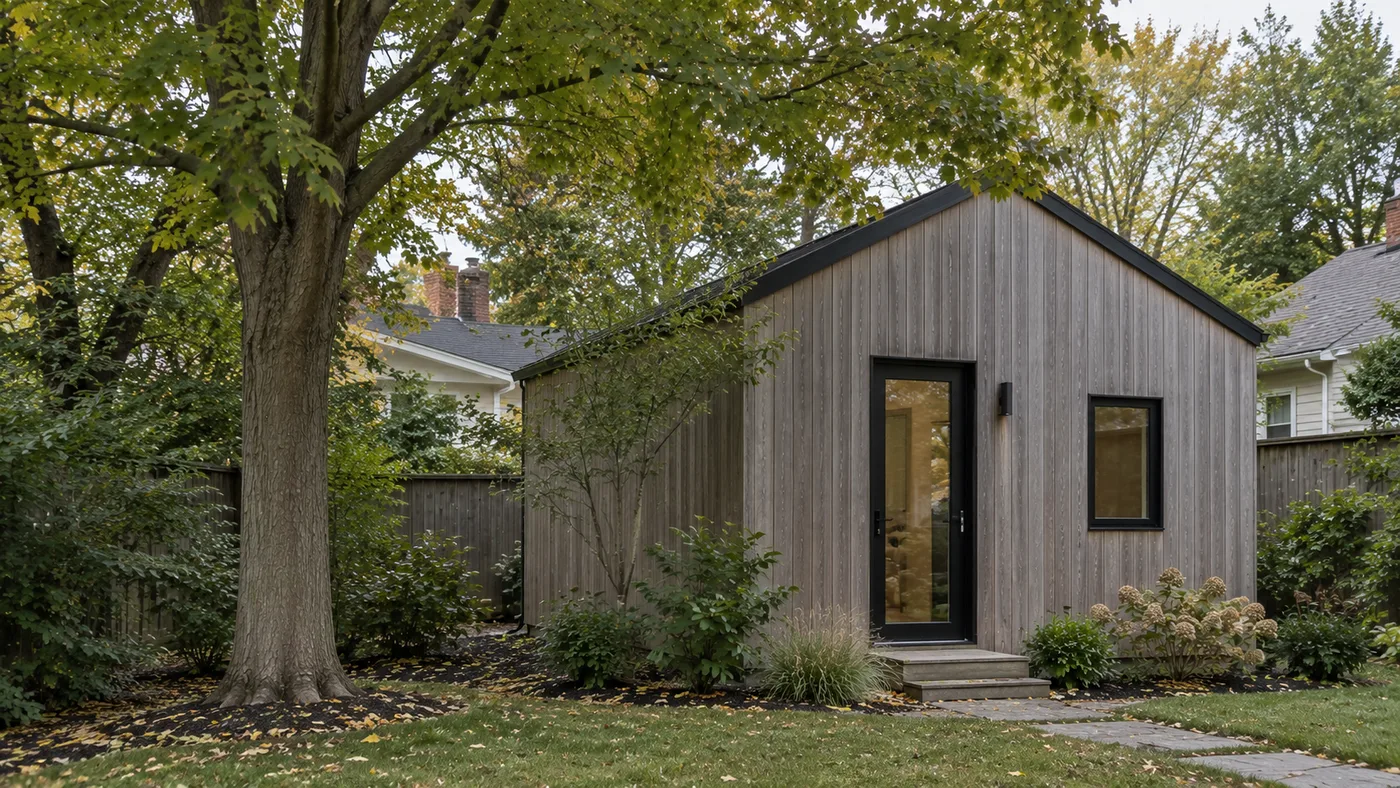
Allowed, with conditions. Arlington calls these accessory dwellings. One is allowed on a lot with a main dwelling under the same ownership, and it may be inside the house, in a basement, or in a detached accessory building such as a garage. It needs a zoning application through Permit Arlington plus a residential building permit. No more than three people may live in it.
ACZO § 12.9.2Read the sectionRead at source Sep 6, 2026How big can it be — If your house is 1,000 sq ft or larger?
Up to 750 sq ft, or 35% of the two units’ floor area combined — whichever is smaller. Note what the percentage is measured against: the floor area of the two units added together, not the house alone. That differs from how Fairfax and Loudoun measure it, and it makes the allowance smaller than it first appears.
ACZO § 12.9.2Read the sectionHow big can it be — If your house is under 1,000 sq ft?
Up to 500 sq ft, or 45% of the two units’ floor area combined — whichever is smaller. Again measured against the two units combined.
ACZO § 12.9.2Read the sectionHow big can it be — A basement conversion?
No specific size limit. No specific size limit applies to an accessory dwelling in a basement, which makes it the most generous route in Arlington.
ACZO § 12.9.2Read the sectionHow far from the property line?
For a detached accessory building put up after 18 May 2019: at least 25 ft from the street, at least 8 ft from any wall of the main house, and at least 5 ft from side and rear lot lines on an interior lot. On a corner lot the rear setback is 10 ft. Buildings that existed before 18 May 2019 are not held to these height, footprint or setback limits. Dimensional standards sit in §3.2 and §5 rather than §12.9.2 and still need reading at source.
ACZO § 12.9.2; dimensional standards §§ 3.2, 5Read the sectionRead at source Sep 6, 2026Do you have to live there?
Yes. You must live in either the main house or the accessory dwelling as your primary residence. Arlington also requires that you allow the county to inspect the accessory dwelling once a year.
ACZO § 12.9.2Read the sectionRead at source Sep 6, 2026Do you need more parking?
Rather than requiring extra spaces, Arlington requires you keep what you have: a lot with one off-street space must keep one, a lot with two or more must keep at least two. If the lot has no off-street parking, you have to create one space.
ACZO § 12.9.2Read the sectionRead at source Sep 6, 2026What does the permit cost?
Arlington publishes a fee schedule rather than a single figure, and the permit page does not state an amount. Needs pulling from the schedule before this page goes live.
Read the sectionRead at source Sep 6, 2026Which kinds are allowed?
All four routes are open here, which is the main practical difference from Fairfax. A detached garage can hold an accessory dwelling, and a basement conversion has no specific size cap.
ACZO § 12.9.2Read the sectionRead at source Sep 6, 2026If you’re in an HOA
The state law does not override your HOA. Check your deed and closing paperwork for a recorded declaration of covenants, or look the property up in the Arlington County land records. If there is an association, its documents decide this — not the county, and not state law.
Va. Code § 15.2-2292.4(F)Read the sectionRead at source Sep 6, 2026Every rule on this page links to the section of the Arlington County ordinance it comes from, so you can read it yourself. Localities are amending these rules ahead of July 1, 2027 — worth confirming the section before you commit money to a design. This is general information about Arlington County, not a determination about your particular lot.
What does this mean for your lot?
Three questions. We’ll check the Arlington County rules against your situation and tell you what you’re actually looking at — including if the answer is no.